


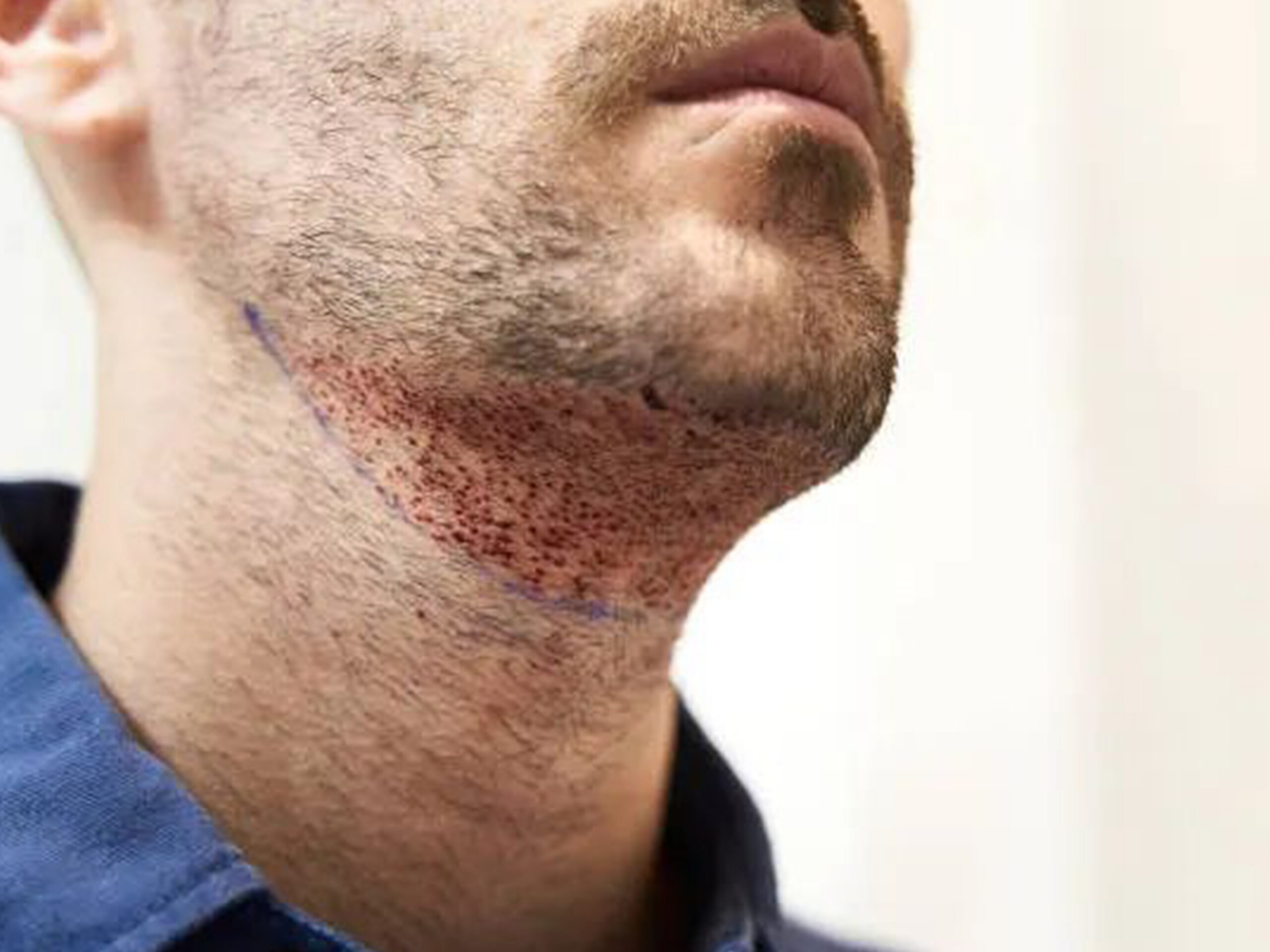
Beard transplant is a permanent solution for patchy, thin or asymmetrical beards. Using the same Sapphire FUE / DHI principles as a scalp transplant, follicles are harvested from your donor area (typically the nape) and implanted into the beard region at the correct angle for natural growth. Whether you want a full, dense beard or you simply want to fill scars and gaps, a beard transplant delivers a permanent, natural-looking result.
What is Beard Transplant?
A beard transplant moves your own hair follicles from a donor zone (the nape, sometimes the chest in special cases) to the cheeks, jawline, chin, sideburns or moustache area. Each graft is implanted at a steep angle of just 10-20° so it lies flat against the skin — exactly like natural beard hair.
Because beard hair grows continuously like scalp hair (the transplanted follicles keep their original biology), the result is permanent. You can shave, trim and style your new beard normally once it has fully grown in.
Who is Beard Transplant For?
- Men with patchy or asymmetrical beards
- People who cannot grow a full beard genetically
- Patients with beard scars from acne, burns or trauma
- Those who want to reshape or widen the beard line
- Men who want to add density to sideburns, cheeks or chin
- Patients seeking a full, modern beard look that lasts a lifetime
How is the Procedure Performed?
- Design: The beard line is drawn together with you on the day of the procedure — width, density, sideburn shape, chin coverage.
- Donor preparation: The nape is shaved and anaesthetised.
- Graft harvesting: Single-follicle grafts are preferred for the beard since beard hair is naturally thicker.
- Channel opening / DHI: Channels are opened at a very shallow angle (10-20°) to mimic natural beard growth. DHI Choi pens can also be used for direct implantation.
- Implantation: Each graft is implanted by hand or pen, in the correct direction and density.
Recovery Timeline
- Day 1-2: Mild redness and small scabs in the beard area. Donor area covered by hair.
- Day 7-10: Scabs fall away; you can shave around the transplant area gently.
- Week 3-6: Possible shock loss — temporary.
- Month 3-6: New beard hair starts to emerge.
- Month 9-12: Final, dense beard achieved; trim or shave like normal.
Advantages
- Permanent, natural beard density
- Hides acne scars, burn scars and surgical scars
- Customisable beard shape — sideburns, jawline, chin
- Fast procedure — usually completed in 4-6 hours
- Short recovery
- You can shave and style normally after a few weeks
Things to Avoid
- Do not shave the beard area for the first 10 days
- Avoid touching, scratching or picking the scabs
- Avoid swimming, sauna and hammam for the first month
- Avoid strenuous activity that causes facial sweating
- Avoid direct sunlight on the beard area early on
Pricing
Beard transplant pricing depends on the number of grafts (typically 1,000-3,000 for full coverage), the technique used (Sapphire FUE or DHI) and any complementary therapies. After your free consultation you receive a transparent quote with no hidden fees.
Why Choose Hair Noard?
Beard transplantation is an aesthetic procedure — the design and angle matter as much as the surgery itself. At Hair Noard, our surgeons combine technical precision with an artistic eye, ensuring your new beard fits your face shape and matches your style goals.
Frequently Asked Questions
Will the beard look natural?
Yes. Because grafts are implanted at the correct angle and density, the new beard blends seamlessly with any existing facial hair.
When can I shave?
You can shave the transplanted area gently after about 3-4 weeks. Light trimming with scissors is usually safe earlier.
Is the procedure painful?
No — local anaesthesia keeps it pain-free. Mild tenderness for 1-2 days afterwards is normal.
How many grafts do I need?
Most full beard cases use between 1,500 and 3,000 grafts depending on coverage goals. Small scar coverage may need just 200-500 grafts.
Can the transplanted beard fall out?
The donor follicles are genetically resistant to loss, so the transplant is permanent. Early shock loss is temporary — new hair regrows from the same follicle.
Considering a beard transplant? Get a personalised design and quote at your free consultation.