


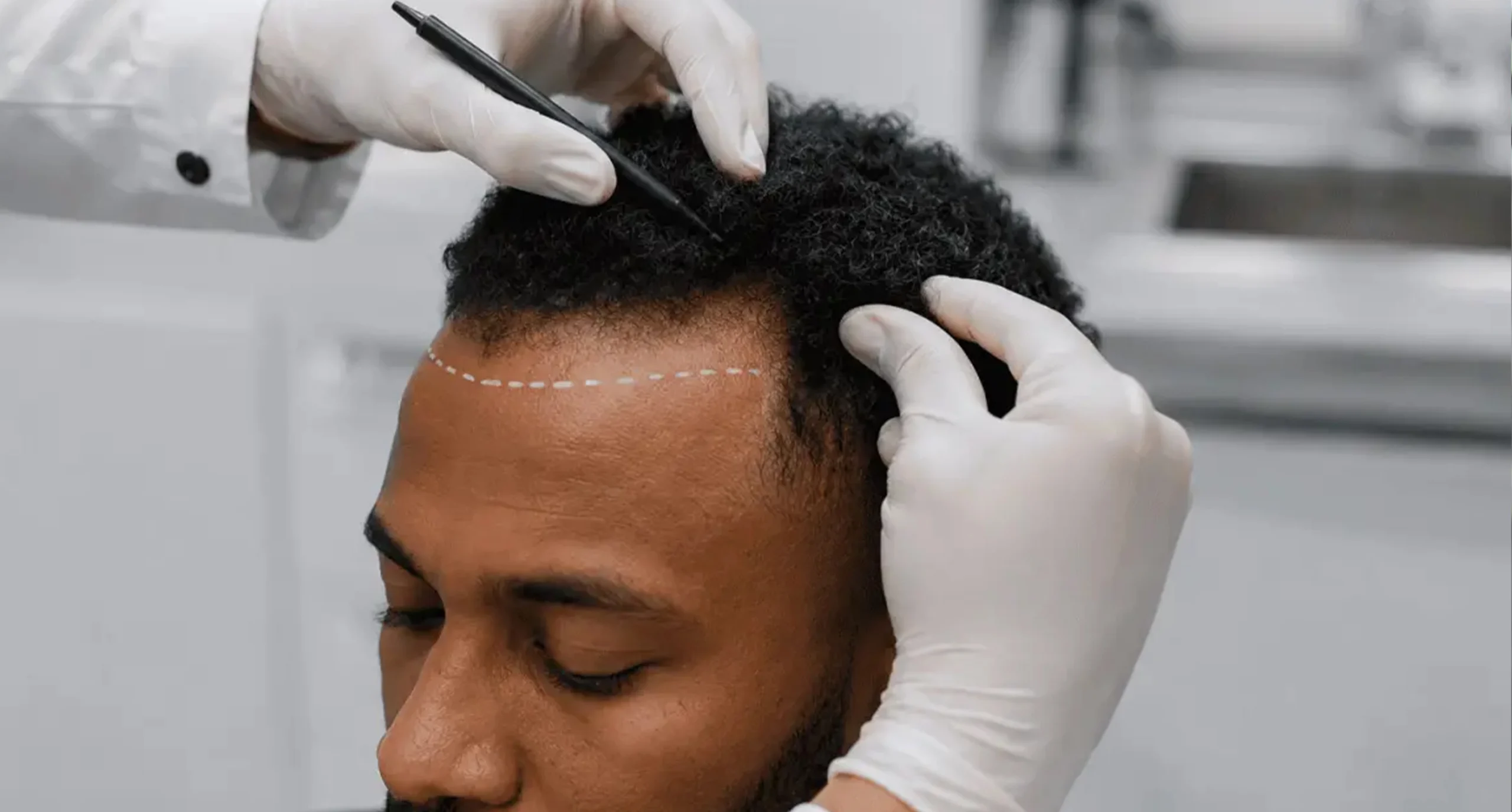
Afro hair transplant is a specialised technique designed for the unique structure of African, Afro-Caribbean and similar curly or coily hair types. Afro follicles are curved beneath the skin — unlike the straight follicles of European or Asian hair — and require a different surgical approach to keep grafts intact, viable and natural-looking. With the right experience and tools, Afro hair transplants produce stunning, permanent results.
What Makes Afro Hair Transplant Different?
Three biological characteristics make Afro hair transplantation more demanding:
- Curved follicle shape: The follicle bends sharply under the scalp, increasing the chance of accidental transection (cutting the root) during extraction.
- Skin elasticity: Afro scalps tend to have more elasticity and stronger tissue, which affects punch size and angle.
- Keloid susceptibility: Some Afro patients are prone to keloid scarring, so wound size and technique must minimise tissue trauma.
For these reasons Afro hair transplants are usually performed with larger micro-punches, slower extraction speed and surgeons who specifically train on this hair type. Sapphire FUE works well; DHI can also be used in selected cases.
Who is a Good Candidate?
- Patients with stable male- or female-pattern hair loss
- People with a healthy donor area and sufficient curly hair density
- Patients seeking hairline restoration or crown density
- Traction alopecia from braids, weaves or wigs (once stable)
- Scar coverage in the scalp from previous trauma
- Beard or eyebrow restoration with Afro-type hair
Who Should Postpone?
- Active untreated traction alopecia — release the traction first
- History of severe keloid scarring (requires careful evaluation)
- Active untreated dermatitis on the scalp
- Patients with limited donor capacity for their goals
How is the Procedure Performed?
- Specialist consultation: Hair texture, scalp condition and donor capacity are assessed in person and via photos.
- Test extractions: Some surgeons perform a small test harvest to confirm transection rate and tailor punch size before the main session.
- Slow, careful extraction: Grafts are removed individually with appropriately sized punches, accounting for the curved follicle.
- Channel opening or DHI: Channels are created with sapphire blades, or grafts are placed directly with Choi pens, at the correct angle for tight curls.
- Implantation: Grafts are implanted with conservative density to preserve circulation and survival, especially for keloid-prone skin.
- Care brief: A personalised plan with shampoos and washing technique appropriate for curly hair.
Recovery
- Days 1-3: Mild swelling; sleep with the head elevated.
- Day 5-7: First professional wash with curl-safe products.
- Day 14-21: Crusts shed; gentle styling resumes.
- Month 1-4: Shock loss is possible — temporary.
- Month 6-12: Density increases and curls re-establish.
- Month 12-18: Full result; styling like before.
After-Care Specifics
- Avoid braids, tight cornrows and weaves for at least 3 months
- Use sulphate-free, gentle shampoos appropriate for curls
- Avoid heat styling, relaxers or chemical treatments for 3-6 months
- Hydrate curls with lightweight, non-comedogenic products
- Avoid direct sunlight and high-heat environments early on
Advantages
- Permanent, natural-looking curl restoration
- Density restored without flattening your natural texture
- Possible for hairline, crown, beard, eyebrows or scar coverage
- Sutureless and minimally invasive
- Specialised technique — surgeons trained on Afro hair
- Combined with PRP / mesotherapy for stronger growth
Pricing
Afro hair transplant typically requires longer sessions and a surgeon with specific expertise, so pricing sits slightly above standard FUE. At Hair Noard, you receive a transparent quote based on graft count, technique and complementary therapies — with no hidden fees.
Why Choose Hair Noard?
We perform Afro hair transplants with surgeons specifically trained on curly and coily follicle anatomy. From punch selection to channel angle, every step of your operation is adjusted to your hair type. Our team also briefs you on long-term curl care so your investment continues to shine years after the procedure.
Frequently Asked Questions
Will my curls look natural after the transplant?
Yes. Because the harvested follicles are your own and retain their genetic curl pattern, the transplanted hair regrows in the same texture as the surrounding hair.
Is there a higher risk of complications with Afro hair?
The transection rate (accidental damage to the curved follicle during extraction) is higher than for straight hair. Choosing a surgeon experienced in Afro transplants is the most important factor in keeping that rate low.
What about keloid scarring?
Patients with a personal or family history of keloids should be evaluated carefully. The use of micro punches and conservative density usually keeps scarring risk minimal, but the surgeon will discuss it openly with you.
How many grafts can be transplanted in one session?
Typically 2,500-4,000 grafts depending on donor density. Larger coverage may be planned over two sessions for the best survival rate.
How long until my curls grow back?
New hair starts to emerge around months 4-6; final density and texture are reached between 12-18 months.
Can I still braid my hair after surgery?
We recommend avoiding tight braids, cornrows and weaves for at least 3 months after surgery. After that, looser styles are fine — your specialist will guide you.
Talk to a specialist trained in Afro hair restoration. Book your free, no-obligation consultation today.